

By:

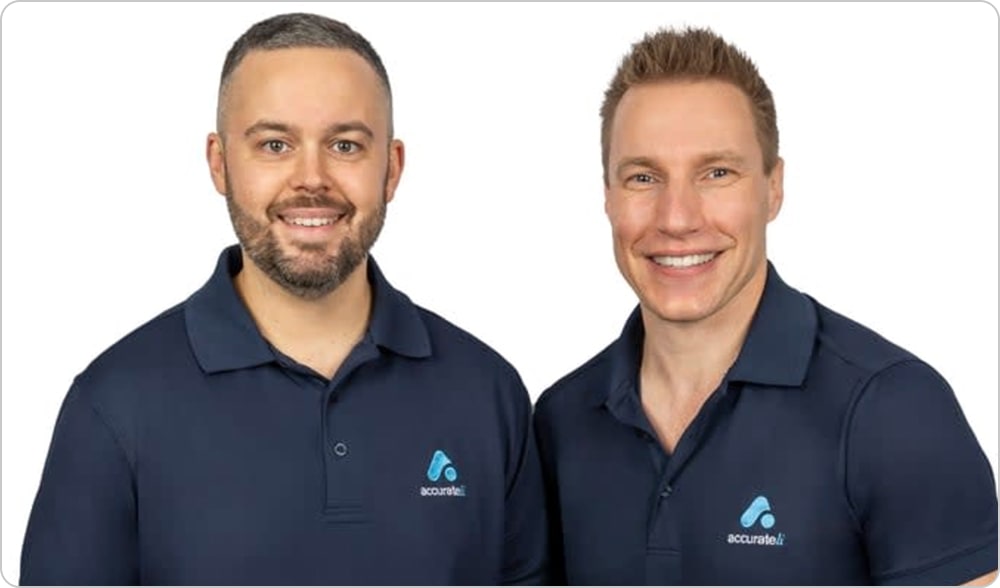
Joel Wyld and Ben Callaghan
Founders of AI-powered software platform Accurateli
Joel Wyld (JW): It was based on Ben doing the self-employed assessment so well and being really difficult to replace… we were thinking, “How do we automate this thing?”
Very early on, we engaged a mentor who had built and sold apps before, and he basically said the only way to be able to read documents with structured and unstructured data is via AI.
JW: It’s quite simple on the user interface side. In fact, we just released our scenario section, which now tells you what documents to upload. Then you answer a set of questions. Those questions are important because they’re questions relating to things that don’t show on the tax return or the financials. Once you finish the questions, you then click generate report, and it gives you a summary of all of the income, non-recurring income, and broker notes to submit to the lender.
It has questions for lenders, so you can copy and paste those and put them in, for example, Cynario, the AI scenario tool, to get your answers. And it also has a Quickli summary, so you can put that straight into Quickli – it takes five seconds to copy that information across.
It gives a full breakdown of all of the different non-recurring incomes you can use, and it has a policy table as well to show you how each lender deals with it.
Ben Callaghan (BC): From my point of view, if you’re relying on these sorts of tools, with the right guardrails in place, it’s okay. A tool like Accurateli would stop you from doing anything that you shouldn’t and highlights things that are important.
The problem is if you’re uploading to ChatGPT or Claude, for example, you don’t know exactly the things to watch out for or be careful of. You need to know all that yourself.
So, I definitely encourage brokers to know the fundamentals.
The problem is if you’re uploading to ChatGPT or Claude, for example, you don’t know exactly the things to watch out for or be careful of. You need to know all that yourself.
- Ben Callaghan
Ben Callaghan (BC): From my point of view, if you’re relying on these sorts of tools, with the right guardrails in place, it’s okay. A tool like Accurateli would stop you from doing anything that you shouldn’t and highlights things that are important.
The problem is if you’re uploading to ChatGPT or Claude, for example, you don’t know exactly the things to watch out for or be careful of. You need to know all that yourself.
The problem is if you’re uploading to ChatGPT or Claude, for example, you don’t know exactly the things to watch out for or be careful of. You need to know all that yourself.
- Ben Callaghan
So, I definitely encourage brokers to know the fundamentals.
JW: There are a lot of tools out there that work really well, but I guess the question is, how much time does it actually save you?
For example, consider using large language models (LLMs) to read your documents. If the document reading is wrong, and you follow it down that path and end up submitting a loan with a lender that ends up being knocked back, what was the point? And who holds the blame and the responsibility for that? Ultimately, you do.
I think that the biggest pub test for all of this is: if you ask your clients, “Do you mind if I upload your information here?” whether you can answer the questions they ask about security. If you can’t, then you shouldn’t be using it.
BC: Fundamentally, does it solve a problem? Does it do what it says it does?
We hear that all the time, and we have this AI fatigue as well, so we completely understand people. But with Accurateli, it’s not, “Oh, we’re doing it in the future,” “Oh, maybe there’s a roadmap to it,” “Oh, maybe we’re going to do this,” or “It does that,” and then it’s, “Oh, well, it doesn’t actually do that, does it?” Accurateli does exactly what we say it does.
BC: Fundamentally, does it solve a problem? Does it do what it says it does?
We hear that all the time, and we have this AI fatigue as well, so we completely understand people. But with Accurateli, it’s not, “Oh, we’re doing it in the future,” “Oh, maybe there’s a roadmap to it,” “Oh, maybe we’re going to do this,” or “It does that,” and then it’s, “Oh, well, it doesn’t actually do that, does it?” Accurateli does exactly what we say it does.
JW: I think the future broker is going to be spending more time with their customer, talking them through not just the transaction, but how they’re feeling about the transaction, their budget, making sure what they’re doing is sustainable, not just in the short-term, but the long-term.
BC: It’s going to become more competitive, but you can spend more time building trust on more interesting things. You can help your clients with strategy and positioning.
So, it actually becomes more people-based than processing-based.
It’s funny, the concern with AI is that we’re going to lose interaction and lose the people side of things. But you’re actually giving more time to do more of those things.
I think the future broker is going to be spending more time with their customer, talking them through not just the transaction, but how they’re feeling about the transaction, their budget, making sure what they’re doing is sustainable, not just in the short-term, but the long-term.
- Joel Wyld
We hear that all the time, and we have this AI fatigue as well, so we completely understand people. But with Accurateli, it’s not, “Oh, we’re doing it in the future,” “Oh, maybe there’s a roadmap to it,” “Oh, maybe we’re going to do this,” or “It does that,” and then it’s, “Oh, well, it doesn’t actually do that, does it?” Accurateli does exactly what we say it does.
BC: Fundamentally, does it solve a problem? Does it do what it says it does?
We hear that all the time, and we have this AI fatigue as well, so we completely understand people. But with Accurateli, it’s not, “Oh, we’re doing it in the future,” “Oh, maybe there’s a roadmap to it,” “Oh, maybe we’re going to do this,” or “It does that,” and then it’s, “Oh, well, it doesn’t actually do that, does it?” Accurateli does exactly what we say it does.
JW: I think the future broker is going to be spending more time with their customer, talking them through not just the transaction, but how they’re feeling about the transaction, their budget, making sure what they’re doing is sustainable, not just in the short-term, but the long-term.
I think the future broker is going to be spending more time with their customer, talking them through not just the transaction, but how they’re feeling about the transaction, their budget, making sure what they’re doing is sustainable, not just in the short-term, but the long-term.
- Joel Wyld
BC: It’s going to become more competitive, but you can spend more time building trust on more interesting things. You can help your clients with strategy and positioning.
So, it actually becomes more people-based than processing-based.
It’s funny, the concern with AI is that we’re going to lose interaction and lose the people side of things. But you’re actually giving more time to do more of those things.
Tune in to hear more!
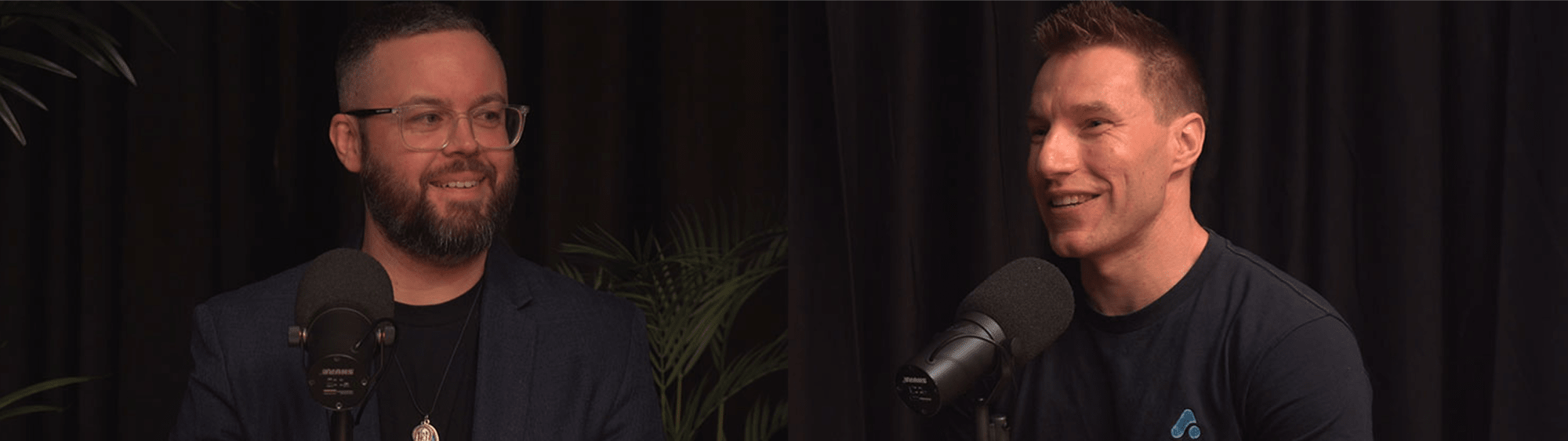
You can listen to the full conversation with Accurateli founders Ben Callaghan and Joel Wyld, in the Broker Daily Spotlight podcast, here:
Joel Wyld and Ben Callaghan
Founders of AI-powered software platform Accurateli