

 iscover
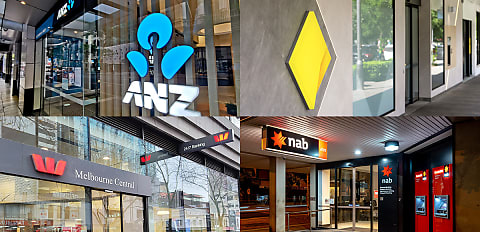

The latest Australian Prudential Regulation Authority (APRA) monthly statistics has revealed that lending to non-financial businesses accelerated in December 2025, with the top 10 banks for business lending seeing their combined loans rise to $962 billion in December 2025.
The major banks continue to dominate the business lending landscape with an 87 per cent share of the total book.
Analysis from Agile Market Intelligence, which tracks movements in loan books and market share across the top 10 lenders – shows that National Australia Bank (NAB) maintained its crown as the largest business lender in the country with a total book of $260.6 billion.
The Commonwealth Bank of Australia (CBA) had the second-largest business lending book (to non-financial businesses) as at December 2025, closing the year at $228 billion. This includes around $168 billion from the business bank.
Westpac emerged as the month’s heavy hitter for volume by adding $3.75 billion to its portfolio, representing the highest dollar-value variance in the market and bringing its total loan book to $194.5 billion.
However, ANZ bucked the positive trend among the majors by recording a decline of 0.16 per cent. This downward movement in business lending is consistent with recent trends observed in the bank's owner-occupied housing books. Despite the slight slip, ANZ remains the fourth-largest business lender with $149.4 billion in loans.
Together, the big four banks contributed a total of $837.1 billion to the overall figure, reinforcing the reality that the market remains heavily concentrated within the major institutions.
However, several foreign players and nimble mid-tiers are beginning to outpace the big four in terms of growth velocity.

Among these players, Bank of China recorded the strongest percentage growth rate at 2.36 per cent across the board, signalling a robust rebound after a slight dip in previous months.
Bank of China and MUFG Bank (part of Japanese bank the Mitsubishi UFJ Financial Group) both recorded faster growth rates than several of their major counterparts (albeit from a lower base), with MUFG’s growth of 1.34 per cent seeing it tie with CBA for the third-fastest growth among the top 10 ADIs.
Aside from these international giants, Macquarie was the only other mid-tier player to remain in positive territory by posting a growth rate of 0.98 per cent.
In contrast, other mid-tier lenders faced a tougher end to the year despite holding significant positions. Sumitomo Mitsui (SMBC) held the largest mid-tier loan book at $23.9 billion, yet it simultaneously saw the sharpest contraction at 5.17 per cent.
Similarly, Rabobank saw its book contract by 1.77 per cent, while Bendigo and Adelaide Bank slipped by 0.66 per cent.
[Related: Broker diversification goes mainstream]
 Want to see more stories from trusted news sources?
Make Broker Daily a preferred news source on Google.
