

 iscover
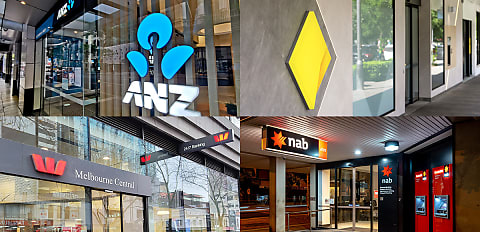

Commonwealth Bank of Australia (CBA), Australia and New Zealand Banking Group (ANZ), Westpac, and National Australia Bank (NAB) all expect the Reserve Bank of Australia (RBA) to leave the cash rate unchanged at 4.35 per cent next week, with no further moves forecast for the remainder of 2026.
The majors, however, remain ambiguous on when the RBA will begin cutting rates again, with all tipping the easing cycle to begin in 2027, but differing on the timing and pace.
It has been a challenging year for the RBA, with inflation remaining stubbornly above target. While the headline consumer price index (CPI) eased to 3.8 per cent in the 12 months to June, from 4 per cent in the year to May, it remains well above the central bank’s 2–3 per cent target band.
The official cash rate started the year at 3.6 per cent before the RBA delivered three consecutive increases in February, March, and May, taking it to the current 4.35 per cent. The central bank then held rates steady in June in a unanimous decision.
Commonwealth Bank of Australia
CBA said it expects the RBA to leave the cash rate unchanged at 4.35 per cent at its August meeting and maintain that setting for the rest of 2026, before two rate cuts in May and August 2027.
The bank said a combination of softer inflation, a cooling labour market, and a weaker housing market had significantly reduced the likelihood of another rate rise. While it still believes the RBA will retain a hawkish tone, recent data has given policymakers scope to remain patient.
“We expect the RBA to remain concerned about elevated inflation and reiterate they will be willing to hike again if required,” CBA senior economist Belinda Allen said.

“Currently there is little need to tighten further given the combination of data prints since June and our forecasts for the remainder of 2026.”
Allen said the central bank would still likely reiterate that it is prepared to lift rates again if inflation accelerates, although the hurdle for another increase is now higher following consecutive softer-than-expected inflation outcomes.
She added that slower growth, a softer jobs market, and further easing in inflation would be needed before the RBA begins cutting rates.
Developments in household spending and the jobs market “will remain critical from here”, Allen said and added that geopolitics is a key watch point.
“The Middle East conflict is another risk because it could encourage businesses to pass higher costs on to customers in the September quarter,” she said.
Australia and New Zealand Banking Group
ANZ is similarly forecasting the RBA will keep the cash rate on hold at 4.35 per cent next week and leave rates unchanged for the remainder of 2026.
The bank said inflation came in slightly below the RBA’s May forecasts, while unemployment has edged a little higher, giving the board reason to pause.
However, it expects policymakers to “retain a hawkish bias and keep open the possibility of further tightening”.
The major added that one area the RBA will continue to watch closely was capacity constraints, particularly in the construction sector, where a record project pipeline could continue to keep construction costs elevated even as broader inflation moderates.
The bank also pointed to stronger-than-expected household spending over the June quarter as evidence consumer demand remains more resilient than anticipated.
ANZ said: “Our base case is for the RBA to keep rates on hold at 4.35 per cent before easing 50bp in the second half of 2027. However, the trajectory of the monthly trimmed mean does suggest that there remains the risk of a rate hike in November.”
Westpac
Westpac has reversed its previous forecast for an August rate rise, with chief economist Luci Ellis now expecting the RBA to leave the cash rate unchanged for the rest of 2026 following a softer inflation result.
The bank said June quarter inflation came in below both its own expectations and the RBA’s forecasts, particularly across services and housing-related costs, prompting it to abandon its tightening call.
“Inflation has been more benign than we feared and the RBA forecast,” Ellis said.
“Below-expectation inflation was needed to rule out the hike, which is what we got.”
Despite the improved inflation picture, Ellis said the central bank is still expected to “stay hawkish” and leave the door open to further tightening should inflationary pressures re-emerge.
National Australia Bank
NAB has also dropped its expectation of an August rate hike, saying it now believes the next move in the cash rate will be down, although exactly when remains uncertain. The bank currently forecasts the cash rate will end 2027 at 3.6 per cent.
According to NAB, the economy has lost momentum since earlier this year, with recent GDP data and its business survey pointing to slower growth and tighter financial conditions. While inflation risks remain, it believes the case for further tightening has diminished.
“The next move in the cash rate is likely to be down, but the timing is uncertain,” NAB chief economist Dr Sally Auld said.
“In February, growth was above trend, the economy was operating above capacity and there was uncertainty over the restrictiveness of rates. None of these conditions exist today.”
Auld said the bank still expects inflation to remain above target into mid-2027 and warned weaker labour market conditions remain a risk, while tighter financial conditions are expected to slow both house price growth and housing credit.
[Related: Settlements swell for Mortgage Choice as REA pushes AI]
 Want to see more stories from trusted news sources?
Make Broker Daily a preferred news source on Google.